One of a kind.Find out which kind.
Koseiha (個性派) is Japanese for someone with a character all their own. A free 40-question test finds your 16-type code, your Big Five traits and your place on the compass.



A report, not a horoscope.
Every number comes from your answers, and every chart shows the scale behind your letters. These belong to an example INFP.
Your Mindprint
A contour map drawn from your exact scores. Each hill is a preference; the red summit marks your highest ground.
- One hill per letter
- Your clearest preference
- Ground set by Composure
Five scales, not four letters
The pale band is the likely range your answers support.
Your compass region
The FrontierHow your mind works
The four cognitive functions behind your type, in the order you tend to use them.
- LeadFiConviction
- SupportNePossibility
- ReliefSiMemory
- EdgeTeEfficiency

Some patterns are everywhere. Others are rare.
How common each type and each letter is among 3,578 US adults. Common or rare, no type is better than another.
- are Anchors (ISTJ), the most common type
- 17.6%
- are Captains (ENTJ), the least common
- 1.8%
- lean Introverted rather than Extraverted
- 61.2%
- lean Observant (S) rather than Intuitive (N)
- 68.5%
All sixteen types, most common first
- ISTJAnchor17.6%
- ISFJSteward10.6%
- ISTPTroubleshooter9.4%
- ESTJQuartermaster8.0%
- ENFPCatalyst7.5%
- ISFPArtist6.7%
- INFPWayfarer6.4%
- ESFJHearthkeeper6.3%
- ESFPSpark5.1%
- ESTPScout4.9%
- INTPCodebreaker4.5%
- INTJCartographer3.1%
- ENTPTrailblazer3.0%
- INFJLamplighter2.9%
- ENFJTorchbearer2.3%
- ENTJCaptain1.8%
Source: MBTI Global Step I results for a US sample of 3,578 adults, matched to US census targets (Schaubhut et al., 2018). Shares differ between countries, age groups and samples.
The four letter pairs
- E Extraverted 38.8%61.2% Introverted I
- N Intuitive 31.5%68.5% Observant S
- T Thinking 52.1%47.9% Feeling F
- J Judging 52.5%47.5% Perceiving P
Sixteen archetypes. Four families.
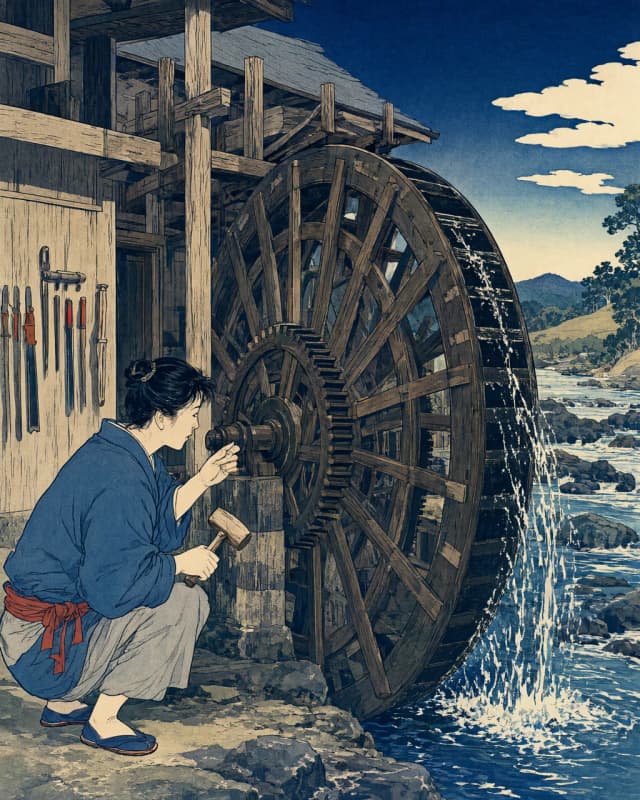
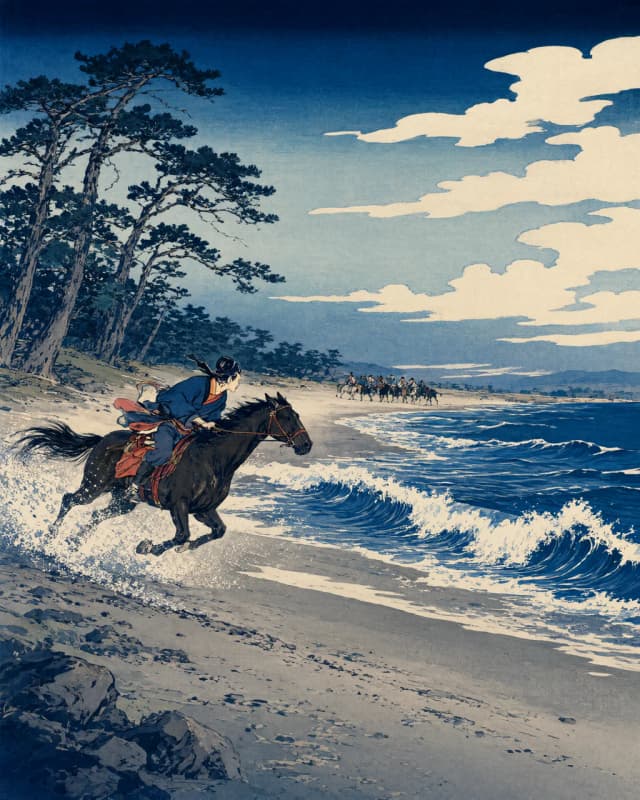
Every type gets an original archetype, a kanji of its own, a full profile and its own woodblock print.














One person, three lenses.
The popular framework, the scientific one, and our own map that joins them. Switch between them to see the same answers three ways.
A name for your pattern
The four-letter code sorts you by your clearest preferences. It is memorable and great for reflection, but it turns continuous scales into either-or categories.
Example person, the same answers in every view
Seekers
6.4% of people are Wayfarers, about 1 in 16.
How two people fit.
Love, friendship, family and work each ask something different of two personalities. Compare any two types, or two real results, in six settings, area by area.
Workable fit
Likely range 64 to 74, from both people's margins
- 46Conflict and careTakes work
- 53Shared plansTakes work
- 87Social lifeNatural
- 88Talk and dreamsNatural

Example pair, as partners
- INFP The Wayfarer
- INTJ The Cartographer
In step on social life and conversation; conflict and plans will take work. As friends, the same two score 82.
Read the full fit
Built to be honest about itself.
- Five continuous scales
- You get a percentage on every scale, not just a letter, so a close call looks like a close call.
- Scenes, not statements
- Every question is an illustrated moment: a this-or-that, a dilemma or a puzzle with no right answer. Both sides are worth wanting, so no answer is the flattering one.
- A range, not just a number
- Every score comes with a likely range worked out from how consistent your answers were, and close calls are flagged.
- Checks on how you answered
- Rushing, one lean for everything or a wall of Torns gets a gentle flag before you see your report.
- Anchored to the Big Five
- Each scale lines up with a Big Five trait, the model with the strongest research behind it.
- Clear about its limits
- We say what a short self-report test can and cannot tell you, and we cite our sources.
Questions people ask first
Is this the official MBTI?
No. The Myers-Briggs Type Indicator is a commercial assessment published by The Myers-Briggs Company. Koseiha is an independent, free test built on the same four Jungian preferences, plus a fifth scale borrowed from the Big Five. Your four letters will often match, but there is no guarantee.
How accurate is it?
About as accurate as a short self-report test can be: good at describing how you see yourself, less certain near the middle of a scale. Your report gives every score a likely range and flags any letter whose range reaches the middle as a close call. For scale, even the official MBTI assessment, with 92 questions, gave 51% of people the same four letters when they retook it within 15 weeks, and 90% kept at least three.
Why scenes instead of statements?
Most tests ask how far you agree with sentences about yourself, which leaves you guessing what a sentence means and makes the flattering answer easy to spot. Each of our questions is a moment drawn as a woodblock print: a choice between two sides that are both worth wanting, or a puzzle with no right answer. You picture yourself there and say which way you would go. The method page explains how each answer is scored.
Can my type change?
Broad traits are fairly stable in adulthood, but they shift gradually over the years, and close calls can flip from one test to the next. Retaking the test after a few months is a good way to see which parts of your result are solid.
What happens to my answers?
Nothing leaves your browser. Your answers and your result are stored on your own device so you can come back to them. There are no accounts, no email and nothing to sign up for.
Why five scales instead of four letters?
The four letters leave out one of the most studied parts of personality: how strongly you react to stress and emotion. We measure it as Composure, then use all five scales to place you on the Big Five and the Koseiha Compass.
Is the full report really free?
Yes. The test, the full report, the shareable card and every type profile are free, with no paid tier and no email required.
What does Koseiha mean?
Koseiha (個性派) is Japanese for someone with a character all their own: one of a kind. No test can capture everything that makes you who you are, but it can show which patterns you share with other people and where you stand apart.
Eight minutes to find your kind.
Free, no sign-up, and your answers never leave your browser.